A Creamy Cure-All? Exploring the Top Health Benefits of Goat Milk
For millennia, tucked away in the annals of diverse cultures, a humble yet potent elixir has been quietly nurturing humanity: goat milk. Long before the era of clinical trials and nutritional labels, our ancestors, from the nomadic tribes of the Middle East to the ancient farmers of Europe and Asia, understood its unique value. They revered it not just as sustenance, but as a balm for the body, a gentle aid for the ailing, and a robust builder of health. Fast forward to the 21st century, and what was once folk wisdom is now being rigorously validated by science.
The question, "Is goat milk a creamy cure-all?" is perhaps too grand, too simplistic for the intricate dance of human health. No single food can claim such a title. Yet, as we delve deeper into its intricate composition, its biochemical interactions with the human body, and its wide-ranging therapeutic potential, it becomes clear that goat milk is undeniably a nutritional powerhouse, a multi-faceted ally in the pursuit of well-being. It is, for many, a profoundly beneficial alternative, a gentle yet potent force that addresses a surprising array of modern health challenges.
This article embarks on an expansive journey to uncover the top health benefits of goat milk, moving beyond superficial claims to explore the scientific mechanisms, the historical context, and the profound impact this ancient food can have on contemporary health. We will unravel the story of its remarkable digestibility, its rich nutrient profile, its role in gut health, immune function, skin vitality, and much more, painting a comprehensive picture of why goat milk is earning its place back at the forefront of the health conversation.
The Genesis of a Gentle Giant: A Historical Perspective
To truly appreciate goat milk’s modern relevance, we must first acknowledge its ancient roots. Goats were among the first animals to be domesticated, likely preceding cattle, and their milk, along with their meat and hides, formed the cornerstone of early human survival. From the fertile crescent where civilization bloomed, through the sun-drenched Mediterranean, across the vast steppes of Asia, and into the rugged terrains of Europe, the goat was a ubiquitous companion.
Ancient texts, from Ayurvedic scriptures to Roman agricultural treatises, extolled the virtues of goat milk. Hippocrates, the father of medicine, reportedly prescribed goat milk for various ailments. In traditional medicine systems across the globe, it was often recommended for individuals with delicate constitutions, the elderly, infants, and those recovering from illness. Its reputation as a "gentler" milk, easier on the stomach, is not a modern invention but a wisdom passed down through generations. This historical backdrop sets the stage for our exploration, reminding us that its perceived benefits are deeply embedded in human experience.
1. The Epitome of Digestibility: A Balm for Sensitive Stomachs
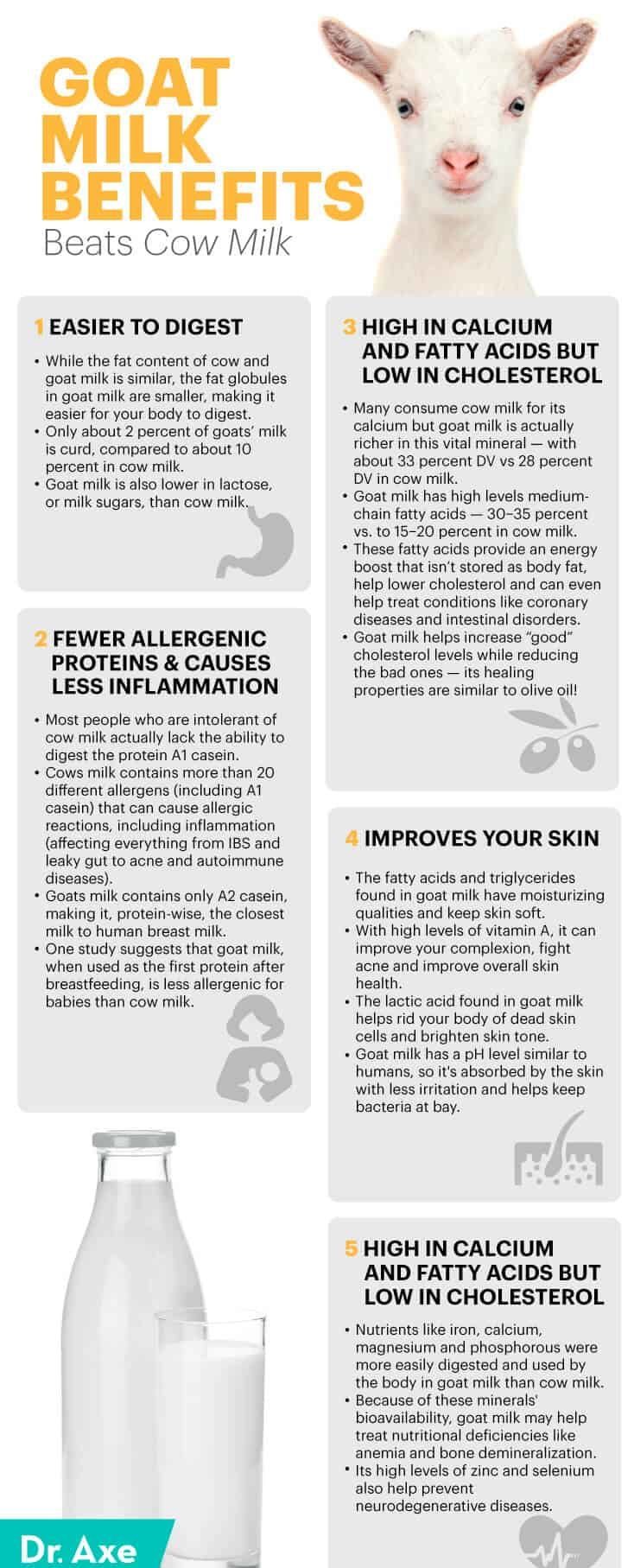
Perhaps the most celebrated and well-researched benefit of goat milk is its superior digestibility compared to cow’s milk, making it a godsend for millions who experience discomfort from conventional dairy. This isn’t merely anecdotal; it’s a consequence of distinct biochemical differences.
a. Smaller Fat Globules:
The fat globules in goat milk are significantly smaller and more uniformly dispersed than those in cow’s milk. Imagine trying to digest large boulders versus fine sand. Smaller particles present a larger surface area for digestive enzymes (lipases) to act upon, leading to quicker and more efficient breakdown in the digestive tract. This translates to less work for your stomach and pancreas, reducing the likelihood of bloating, gas, and abdominal discomfort.
b. Unique Protein Structure: The Casein Conundrum:
This is where the plot thickens for many dairy-sensitive individuals. Cow’s milk is predominantly made up of alpha-S1 casein, a protein that forms a dense, tough curd in the stomach. This curd can be challenging to digest, leading to prolonged transit times and potential irritation for sensitive digestive systems. Goat milk, on the other hand, contains very low or no alpha-S1 casein. Instead, it is rich in alpha-S2 casein and beta-casein, which form a much softer, looser, and more fragile curd in the stomach. This "fluffy" curd is easier for digestive enzymes to penetrate and break down, mirroring the digestibility of human breast milk. For those who experience digestive upset, inflammatory responses, or even allergy-like symptoms from cow’s milk protein, this difference can be revolutionary.
c. Lower Lactose Content:
While not lactose-free, goat milk generally contains slightly less lactose (milk sugar) than cow’s milk. For individuals with mild lactose intolerance, this marginal difference can be enough to avoid the unpleasant symptoms like gas, bloating, and diarrhea. While it won’t be suitable for severe lactose intolerance, it offers a more tolerable option for many.
In essence, goat milk acts like a gentle hand for sensitive stomachs, making it an ideal choice for infants, the elderly, and anyone seeking a dairy option that supports, rather than challenges, their digestive well-being.
2. A Symphony of Nutrients: Beyond Basic Sustenance
Goat milk is not just easily digested; it is a nutritional powerhouse, packed with a broad spectrum of vitamins, minerals, proteins, and beneficial fatty acids that contribute to overall health. It’s a testament to nature’s efficient design, delivering a concentrated dose of essential building blocks for the body.
a. Rich in Essential Vitamins:
Goat milk is an excellent source of several crucial vitamins. It boasts higher levels of Vitamin A (in its readily usable form, unlike the beta-carotene in cow’s milk, which needs conversion), vital for vision, immune function, and skin health. It’s also a good source of Riboflavin (Vitamin B2), essential for energy metabolism, and Niacin (Vitamin B3), important for cellular function. While cow’s milk is often fortified with Vitamin D, goat milk naturally contains some, and fortified versions are also available, supporting bone health and immunity.
b. Mineral Marvel:
The mineral profile of goat milk is particularly impressive. It’s rich in Calcium, the cornerstone of bone and teeth health, but also crucial for nerve transmission and muscle function. It provides substantial amounts of Phosphorus, which works synergistically with calcium, and Magnesium, vital for over 300 enzymatic reactions in the body, including muscle and nerve function, blood glucose control, and blood pressure regulation. Perhaps most notably, goat milk contains higher levels of Potassium than cow’s milk, an electrolyte critical for fluid balance and heart health. It also supplies good amounts of Selenium, a potent antioxidant, and Zinc, essential for immune function, wound healing, and DNA synthesis. The bioavailability of these minerals in goat milk is often superior due to its unique protein and fat matrix.
c. Complete Protein Source:
Like cow’s milk, goat milk is a complete protein, meaning it contains all nine essential amino acids that the human body cannot produce on its own. These amino acids are the building blocks for muscles, enzymes, hormones, and virtually every tissue in the body. The quality of goat milk protein, combined with its digestibility, makes it an excellent choice for muscle repair, growth, and overall cellular maintenance.
d. Beneficial Fatty Acids: The MCT Advantage:
Goat milk’s fat content isn’t just about small globules; it’s also about the type of fats. It contains a higher proportion of Medium-Chain Triglycerides (MCTs), such as capric, caprylic, and caproic acids, compared to cow’s milk. MCTs are uniquely metabolized by the body. Instead of requiring bile salts for digestion and being stored as fat, they are rapidly absorbed and transported directly to the liver, where they are converted into energy. This makes MCTs a quick and efficient energy source, less likely to be stored as body fat, and potentially beneficial for weight management, athletic performance, and cognitive function. These fatty acids also possess antimicrobial and antifungal properties, adding another layer to goat milk’s health benefits.
3. Gut Health Guardian: Nurturing the Inner Ecosystem
The modern understanding of health increasingly points to the gut as the command center for overall well-being. A healthy gut microbiome – the trillions of bacteria residing in our intestines – is crucial for everything from digestion and nutrient absorption to immune function and even mood. Goat milk emerges as a significant ally in cultivating a thriving gut environment.
a. Prebiotic Powerhouse: Oligosaccharides:
One of the most exciting discoveries regarding goat milk is its rich content of oligosaccharides. These complex carbohydrates are non-digestible by human enzymes, meaning they pass through the upper digestive tract intact. Once they reach the large intestine, they act as powerful prebiotics, serving as food for beneficial gut bacteria like Bifidobacteria and Lactobacilli. By nourishing these "good" bacteria, goat milk oligosaccharides help to:
- Promote a balanced gut microbiome: Suppressing the growth of pathogenic bacteria and encouraging the proliferation of beneficial strains.
- Enhance nutrient absorption: A healthy microbiome is more efficient at extracting nutrients from food.
- Strengthen the gut barrier: A robust gut lining prevents toxins and undigested food particles from entering the bloodstream, a condition known as "leaky gut."
The concentration and diversity of oligosaccharides in goat milk are comparable to, and in some aspects, even surpass, those found in human breast milk, highlighting its evolutionary role in supporting infant gut health.
b. Anti-inflammatory Properties:
Chronic inflammation in the gut is a hallmark of many digestive disorders, including Irritable Bowel Syndrome (IBS) and Inflammatory Bowel Disease (IBD). The unique fatty acid profile of goat milk, particularly its MCTs, combined with its oligosaccharides and specific protein structure, contributes to its anti-inflammatory potential. By reducing inflammatory markers in the gut, goat milk can help soothe irritated digestive linings and promote healing. Its gentle digestibility also reduces the mechanical stress on an already sensitive gut, further contributing to a calmer internal environment.
4. Immune System Support: Building a Robust Defense
A healthy gut is inextricably linked to a strong immune system. Approximately 70-80% of our immune cells reside in the gut-associated lymphoid tissue (GALT). By fostering a healthy gut microbiome and reducing inflammation, goat milk indirectly fortifies our body’s defenses. However, its direct contributions to immunity are also noteworthy.
a. Micronutrient Powerhouses: Zinc and Selenium:
As mentioned earlier, goat milk is a good source of Zinc and Selenium. Zinc is critical for the development and function of immune cells, including T-cells and natural killer cells, which are vital for fighting off infections. Selenium is a powerful antioxidant that protects immune cells from damage and plays a key role in the production of antibodies.
b. Oligosaccharides and Pathogen Defense:
Beyond nourishing beneficial bacteria, some goat milk oligosaccharides can directly bind to pathogens, preventing them from attaching to the gut lining and initiating infection. This acts as a protective shield, enhancing the body’s natural defense mechanisms against viruses and bacteria.
c. Reduced Allergenic Potential:
For individuals sensitive to cow’s milk proteins, the inflammatory response triggered by these proteins can compromise immune function over time. By offering a less allergenic and easier-to-digest alternative, goat milk can reduce systemic inflammation and allow the immune system to function more optimally, rather than constantly reacting to food sensitivities.
5. Radiance from Within: Skin Health Benefits
The old adage "you are what you eat" holds particularly true for skin health. A glowing complexion often reflects a well-nourished body and a healthy gut. Goat milk contributes to skin vitality through both internal consumption and topical application.
a. Internal Nourishment:
The rich array of vitamins (A, B2, B3), minerals (zinc, selenium), and beneficial fatty acids (MCTs) in goat milk provides essential nutrients for skin cell regeneration, repair, and protection. Vitamin A, in particular, is crucial for skin cell turnover and maintaining a healthy skin barrier. Zinc aids in wound healing and reduces inflammation, which can be beneficial for conditions like acne and eczema. The anti-inflammatory properties of goat milk, stemming from its oligosaccharides and specific fats, can also help calm skin conditions rooted in systemic inflammation.
b. Topical Elixir: Goat Milk Soap and Skincare:
Goat milk has gained immense popularity in skincare products, especially soaps, lotions, and creams. When applied topically, its benefits are manifold:
- Gentle Cleansing: The lactic acid in goat milk is a natural alpha-hydroxy acid (AHA) that gently exfoliates the skin, removing dead skin cells and promoting cell renewal without harsh scrubbing.
- Deep Moisturization: The fat molecules in goat milk, particularly its unique fatty acid profile, are excellent emollients. They help to hydrate and nourish the skin, creating a protective barrier that locks in moisture, leaving skin feeling soft, supple, and smooth.
- pH Balance: Goat milk has a pH level very similar to that of human skin, which helps to maintain the skin’s natural acid mantle. This protective layer is crucial for defending against bacteria and environmental pollutants.
- Anti-inflammatory and Antimicrobial: The capric, caprylic, and caproic acids in goat milk possess natural antimicrobial and anti-inflammatory properties, which can be beneficial for soothing irritated skin, reducing redness, and combating acne-causing bacteria.
- Vitamin and Mineral Delivery: Topical application allows direct delivery of vitamins and minerals to the skin, further enhancing its health and appearance.
For individuals with sensitive skin, eczema, psoriasis, or chronic dryness, goat milk-based skincare products often provide significant relief and improvement.
6. Bone Health Builder: More Than Just Calcium
While cow’s milk is often touted as the primary source for strong bones, goat milk offers a comparable, and in some aspects, superior profile for skeletal health.
a. Calcium, Phosphorus, and Magnesium Synergy:
Goat milk provides abundant Calcium and Phosphorus, two minerals that are the primary structural components of bone. Crucially, it also supplies Magnesium, which plays a vital role in calcium absorption and bone formation. These three minerals work in concert, rather than isolation, for optimal bone density and strength. The superior bioavailability of these minerals in goat milk ensures that the body can effectively utilize them for skeletal health.
b. Vitamin D (Fortified):
While naturally present in smaller amounts, many commercially available goat milk products are fortified with Vitamin D, which is essential for calcium absorption and metabolism. Without adequate Vitamin D, even a calcium-rich diet may not effectively support bone health.
Regular consumption of goat milk, particularly as part of a balanced diet, can contribute significantly to the prevention of osteoporosis and maintaining strong bones throughout life, from childhood growth to adult maintenance and elderly protection.
7. Metabolic Health and Weight Management: An Unexpected Ally
In the ongoing battle against metabolic syndrome, obesity, and diabetes, dietary choices play a pivotal role. Goat milk, with its unique composition, can be an unexpected but valuable ally.
a. Efficient Energy from MCTs:
As discussed, the higher concentration of Medium-Chain Triglycerides (MCTs) in goat milk means these fats are metabolized differently than longer-chain fats. They are quickly converted into energy rather than being stored as adipose tissue. This rapid energy utilization can help boost metabolism and provide sustained energy, reducing the likelihood of energy crashes and subsequent cravings.
b. Satiety and Protein Content:
The high-quality protein in goat milk contributes to satiety, helping individuals feel fuller for longer. This can reduce overall calorie intake by minimizing snacking and overeating, which is crucial for weight management. Protein also has a higher thermic effect than fats or carbohydrates, meaning the body expends more energy to digest and metabolize it.
c. Potential for Blood Sugar Regulation:
While more research is needed, some studies suggest that the unique protein and fat matrix of goat milk might have a more favorable impact on blood sugar regulation compared to cow’s milk, potentially due to its slower digestion and absorption. Its comprehensive nutrient profile also supports overall metabolic function.
8. Reduced Allergenic Potential and Sensitivity Management
For a significant portion of the population, cow’s milk is a source of discomfort, ranging from digestive upset to full-blown allergic reactions. Goat milk often serves as a lifeline for these individuals.
a. Alpha-S1 Casein Allergy:
The primary culprit behind many cow’s milk allergies is the alpha-S1 casein protein. As highlighted, goat milk contains very low or no alpha-S1 casein, making it a viable and often well-tolerated alternative for individuals with this specific allergy. While it’s crucial to consult a healthcare professional for diagnosed allergies, many people who react to cow’s milk find relief with goat milk.
b. Cross-Reactivity:
It’s important to note that cross-reactivity can occur. Individuals with severe cow’s milk protein allergy might also react to goat milk proteins, as there are some shared protein structures. However, for those with sensitivities or mild allergies, the difference in protein structure is often enough to prevent an adverse reaction.
c. Less Inflammatory:
Beyond specific allergies, many people experience non-allergic sensitivities to cow’s milk, leading to inflammation, digestive issues, and other systemic symptoms. Goat milk’s easier digestibility, lower inflammatory potential, and beneficial gut-supporting compounds often make it a far less inflammatory food choice, helping to calm the immune system rather than constantly stimulating it.
Beyond the Liquid: The Versatility of Goat Milk Products
The benefits of goat milk extend far beyond its liquid form. Its versatility allows for a wide array of delicious and nutritious products that can be easily incorporated into any diet.
a. Goat Cheese: From fresh chèvre to aged hard cheeses, goat cheese offers a tangy, often earthy flavor profile and retains many of the milk’s beneficial nutrients. It’s an excellent source of protein and calcium.
b. Goat Yogurt: Fermented goat milk yogurt is a fantastic source of probiotics, further enhancing its gut-health benefits. It’s creamy, tangy, and can be used in smoothies, dips, or enjoyed on its own.
c. Goat Kefir: A fermented beverage even richer in probiotics than yogurt, goat kefir is a potent ally for gut health and immunity.
d. Goat Milk Powder: A convenient option for travel or storage, goat milk powder can be reconstituted or added to recipes, retaining most of the original milk’s nutritional value.
e. Goat Milk Ice Cream: For those with dairy sensitivities who crave a frozen treat, goat milk ice cream offers a delicious and often more tolerable alternative.
These products not only make goat milk more accessible and enjoyable but also provide additional health benefits through fermentation, which increases nutrient bioavailability and introduces beneficial bacteria.
Considerations and the Path Forward
While the benefits of goat milk are extensive, it’s essential to approach it with a balanced perspective.
a. Taste: Goat milk has a distinct flavor, often described as slightly tangier or "goaty" compared to cow’s milk. This taste varies depending on the breed of goat, the freshness of the milk, and how it’s processed. While many find it delicious, it might take some getting used to for others.
b. Cost and Availability: Goat milk products can be more expensive and less widely available than cow’s milk, depending on geographic location. However, as demand grows, so too does accessibility.
c. Lactose Intolerance: As noted, while lower in lactose, it is not lactose-free. Individuals with severe lactose intolerance will still need to avoid it or opt for lactose-free versions.
d. Protein Allergy: While generally better tolerated, individuals with a severe cow’s milk protein allergy could potentially react to goat milk due to cross-reactivity. Always consult a doctor for severe allergies.
The scientific community continues to explore the nuances of goat milk, with ongoing research into its specific oligosaccharide profiles, its impact on specific diseases, and its role in personalized nutrition. As we move forward, the ancient wisdom surrounding goat milk is being increasingly substantiated by modern science, solidifying its place as a valuable component of a health-conscious diet.
Conclusion: Embracing the Gentle Power of Goat Milk
The journey through the top health benefits of goat milk reveals a truly remarkable food. Far from being just an alternative for those who cannot tolerate cow’s milk, it stands on its own as a powerhouse of nutrition, a guardian of gut health, a supporter of immunity, and a balm for sensitive systems. Its superior digestibility, rich array of vitamins and minerals, beneficial fatty acids, and unique prebiotic oligosaccharides paint a comprehensive picture of a food that actively contributes to holistic well-being.
"A creamy cure-all?" Perhaps not in the simplistic sense of a magic bullet, but rather as a profoundly synergistic food that addresses multiple facets of health simultaneously. It helps rebuild the gut, strengthens immunity, nourishes the body at a cellular level, and often does so with a gentleness that many other foods cannot match.
In a world increasingly seeking natural, wholesome, and effective ways to support health, goat milk is re-emerging from the shadows of its more dominant bovine cousin. It invites us to reconnect with an ancient source of sustenance, to listen to the wisdom of our ancestors, and to embrace a creamy, nutrient-dense elixir that holds a surprisingly potent key to a healthier, more vibrant life. For those willing to explore its subtle charms, goat milk offers not just nourishment, but a story of resilience, tradition, and profound health benefits, making it a truly invaluable addition to the modern pursuit of well-being.